Air-Cooled Porsche 911: The 964 and 993 Market in 2026
The last air-cooled Porsche 911s have tripled in price over a decade. Here is what 964 and 993 buyers actually face in 2026.
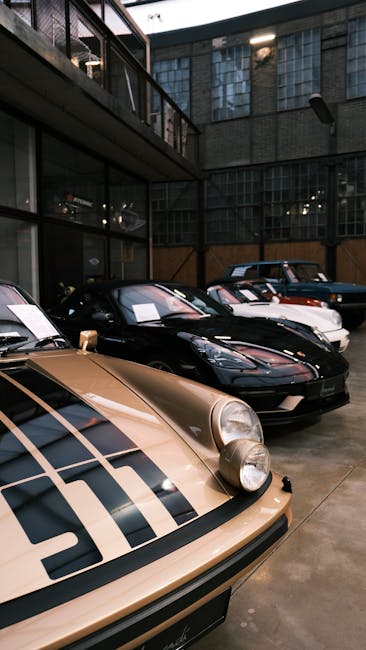
The air-cooled 911 market has been running hot for over a decade, and the 964 and 993 generations are where the interesting action is in 2026. These are the last of the air-cooled cars, produced from 1989 through 1998, before Porsche switched to water cooling with the 996. The end-of-an-era framing has turned them from used Porsches into investment-grade collector cars. Prices have roughly tripled in the past ten years, and they're still moving.
If you're considering a 964 or 993 as a buyer, an enthusiast, or as an investment, the landscape has changed enough since 2020 that old advice no longer applies. Here's what's actually happening in the market, what each model costs right now, and where the pitfalls live.
964 vs 993: the actual differences
The 964 is the 1989-1994 body, with 85% new components over the 3.2 Carrera it replaced but the same fundamental silhouette. Power steering was new. The suspension was redesigned to mount on a subframe. All-wheel drive arrived as the Carrera 4. The engine displaced 3.6 liters and made 247 horsepower, later 270 in RS spec. The interior feels like a 1980s car because it is one. Switchgear, upholstery, and ergonomics are vintage.
The 993 is the 1994-1998 body, the final air-cooled evolution. New multilink rear suspension replaced the 964's semi-trailing arm design, fixing the most controversial handling trait of the prior car. The engine grew to 272 horsepower base and climbed to 430 in the Turbo S. The interior was modernized, with a proper HVAC system and more contemporary switchgear. Widely regarded as the best-handling air-cooled Porsche, and consequently the most expensive.
Which one should you want
Depends on what you're buying it for. The 993 drives noticeably better. Handling is more resolved, the engine is smoother, the interior is more livable on a long trip. If you're buying a usable classic to drive regularly, the 993 is probably the right answer.
The 964 has more character and more visual connection to the original 1960s 911. It's also about 30% cheaper than equivalent 993s, which matters when driver-quality cars are $80,000 versus $115,000. For the same money you can buy a really nice 964 or a lesser 993. Depending on how you value condition versus generation, either is defensible.
Current pricing
Mid-2026 market for both generations, in driver-quality condition with reasonable miles (under 100,000), unmolested, complete service history:
- 964 Carrera 2 coupe: $72,000 to $95,000
- 964 Carrera 4 coupe: $68,000 to $90,000
- 964 Turbo 3.3: $180,000 to $240,000
- 964 Turbo 3.6: $380,000 to $520,000
- 964 RS (US-spec imports): $225,000 to $310,000
- 993 Carrera coupe: $108,000 to $145,000
- 993 Carrera 4S: $165,000 to $220,000
- 993 Turbo: $280,000 to $380,000
- 993 GT2: $1.2M to $2.2M, if you can find one
Convertibles run 15-20% less than coupes in both generations. Tiptronic automatics run 10-15% less than manuals. Targas run 5-10% less than coupes but have their own enthusiast following.
What's driving the prices right now
Three factors. First, the air-cooled narrative has fully consolidated. These are the last of the pure air-cooled 911s, full stop. No more are being made. Supply is fixed. Demand keeps growing as newer enthusiasts discover them.
Second, the 996 water-cooled generation that followed has been tainted by the IMS bearing issue. Many people who would otherwise shop a 996 for similar money instead reach into the air-cooled market, which pushes 964 and 993 prices higher.
Third, restoration-level examples have been taking massive auction prices, which sets a reference ceiling that pulls everything below it up. A $400,000 concours 993 makes a $135,000 driver look affordable by comparison.
The common problems
Dual-mass flywheels on 964s. The clutch system uses a dual-mass flywheel that wears out around 80,000-100,000 miles. When it goes, you get chattering, slipping, and eventually clutch failure. Replacement is a $3,500 to $5,000 job including clutch. Factor it into any purchase of a 964 over 80,000 miles that hasn't been addressed.
Secondary air injection valves on 964 and early 993. These were failure-prone. When they go, you get a check engine light and slight performance loss. Not catastrophic but a $400-800 repair and commonly neglected. Look for recent replacement in service records.
Valve cover gaskets on 993. The lower valve cover gaskets leak as rubber ages. Not dangerous but messy. Replacement is $1,200-1,800 because of labor access.
Power steering rack leaks on both generations. The rack housings crack as they age. Replacement is $2,800 to $4,200.
Bigger potential problems
Top-end engine wear on 993s approaching 150,000 miles. The Mahle case halves and the valvetrain can show wear at higher mileages. A pre-purchase leakdown and compression test is non-negotiable. Engine rebuild is $22,000 to $35,000 depending on what you find inside.
Chain tensioners on 964 and early 993 need attention. These cars use hydraulic tensioners that can fail, and when they fail you can lose valve timing and damage the engine. The solution is to upgrade to later-spec tensioners during any major service.
Paint conditions matter because original paint adds significant premium. Resprayed cars can look fine but sell for 15-25% less than matching-number cars with original paint. Magnet test to verify no body filler. Paint depth gauge to verify original thickness.
What to look for in a specific example
Service history is the most important factor after confirming it's a legitimate car. Complete records from new, ideally Porsche dealer maintained, add 20-30% to value. Unbroken chain of oil changes at specified intervals. Major services (1990s cars tend to need 60,000 and 90,000 mile major services) performed on time with parts invoices.
Originality beats restoration. A 993 Carrera with original paint, original interior, and the numbers-matching engine is worth more than a restored example. Restorations are never quite as good as original, and the market rewards untouched cars.
- Match the engine number to the chassis number through Porsche Classic
- Confirm the transmission matches the car
- Request a Certificate of Authenticity from Porsche Classic for any car over $100,000
- Verify Targa top mechanism works (Targas only)
- Test the climate control on a warm day, because rebuilds are expensive
- Check all electrical features including power windows, mirrors, and seats
The air-cooled pre-purchase inspection
Do not skip this. A proper pre-purchase inspection at a Porsche specialist runs $400-700 and is the best money you'll spend on the transaction. The specialist should perform a full compression and leakdown test, check for oil leaks in the specific failure-prone areas, evaluate the transmission, scan for fault codes including history codes, and provide a written report with photos.
Do not accept a seller's pre-purchase inspection or one from a shop they recommend. You pick the shop. Their name has to be on the report, not a generic checklist. Specific specialists in major US cities who do this work well: GMP Performance in North Carolina, Callas Rennsport in California, Rasant Products in New York. Every major metro has a reputable specialist; the marque clubs can point you to them.
Ownership realities
Insurance through Hagerty or similar runs $800-1,600 per year on a $120,000 air-cooled 911 with limited usage. Storage is mandatory if you care about preservation. Routine service should happen at a specialist, not at a Porsche dealer unless the dealer has dedicated air-cooled experts (many don't).
Driving these cars is the point. They are usable classics that reward being driven. A 993 will cruise all day at 80 mph and still handle a canyon road on the way home. Ownership costs are manageable if you drive 3,000-5,000 miles a year. They balloon if you try to daily drive one in bad weather or heavy traffic.
The investment angle
Air-cooled 911s have outperformed the S&P 500 on price appreciation for roughly the last fifteen years. This outperformance cannot continue indefinitely. At some point, prices plateau or correct. Nobody knows exactly when. What this means for a 2026 buyer is that you should purchase a car you want to drive and keep, not a car you expect to flip for 25% next year. The fast money in this market was made in 2015-2020. The slow money is still being made, but slowly.
If you buy a 964 or 993 to drive for 5-10 years and sell later, you'll probably come out ahead after ownership costs. Maybe significantly ahead, depending on the market. If you buy one to drive for a season and flip, you're probably going to take a loss after inspection, transport, dealer fees, and ownership costs. These cars reward patience. They punish impatience like almost no other asset class.