Electric Trucks in 2026: Are They Finally Ready for the People Who Actually Tow?
Electric pickups can finally out-tow a diesel on paper, but hook up a real trailer and the range numbers tell a different story. Here's what the Lightning, R1T, Silverado EV, and Ram 1500 REV actually deliver once the hitch is loaded.
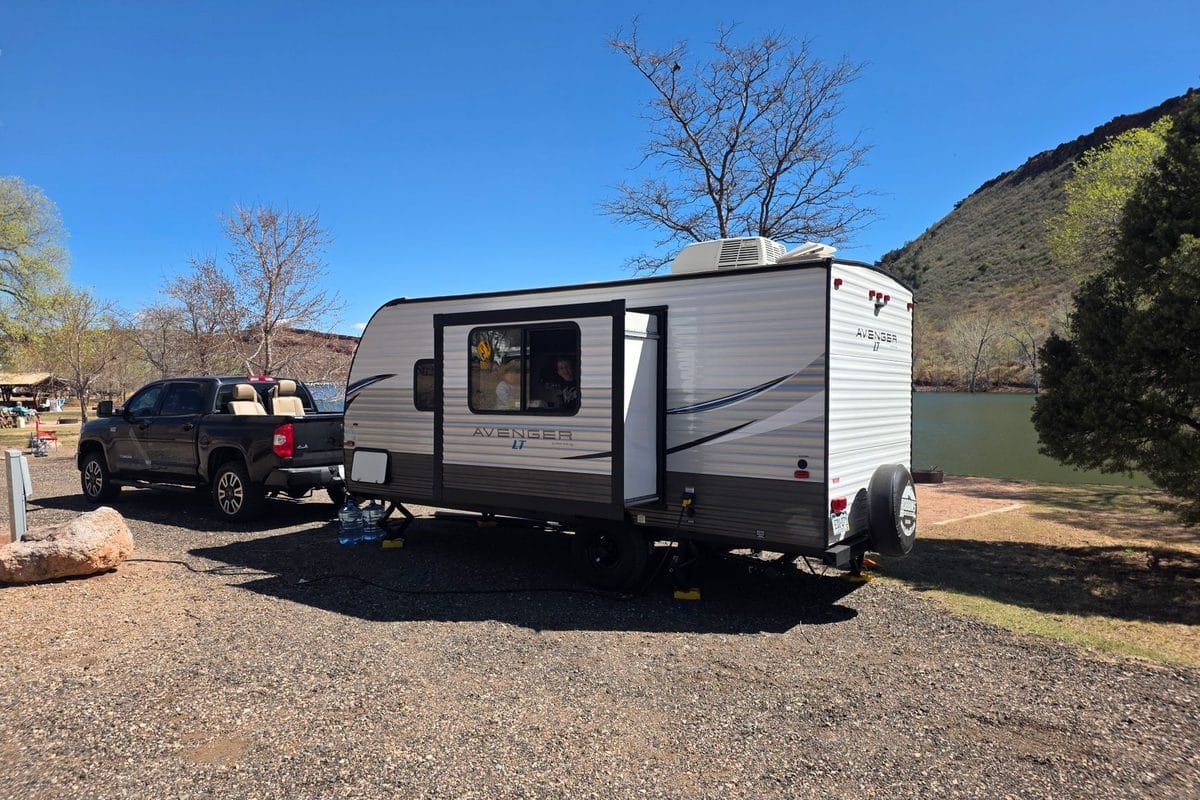
Hook a 7,000-pound travel trailer to an electric F-150 Lightning and watch the range readout do something a gas truck's fuel gauge never does: it doesn't drop, it collapses. A truck rated for 320 miles on a full charge can show barely half that the moment the hitch clicks into place, and the number keeps sliding as wind resistance and rolling weight do their work at 65 mph. If you're the guy hitching up a boat every Friday in July, that number is the one that decides whether this truck fits your life, not the one on the window sticker.
Ford, Rivian, Chevrolet, and Ram have all shipped electric pickups with genuine towing capacity on paper — 10,000 to 14,000 pounds depending on configuration, numbers that would have sounded like science fiction on an EV five years ago. The question in 2026 isn't whether these trucks can pull a trailer. It's whether they can do it on a real trip, on a real schedule, without turning a four-hour drive into a day-long exercise in charging-app roulette.
The Towing Range Problem — Real Numbers, Not Window-Sticker Numbers
Start with what towing actually does to an EV's range, because the manufacturers' EPA-rated figures are close to meaningless once a trailer is attached. The Ford F-150 Lightning Extended Range is rated at 320 miles unloaded, but owners and outlets that have actually hitched up campers and boats report real-world figures in the 100 to 150 mile range at highway speed, depending on trailer weight and shape. The Rivian R1T Quad-Motor, rated around 328 miles unloaded, tends to land in a similar band once you're pulling anything over 6,000 pounds — sometimes a bit better thanks to Rivian's motor management, sometimes worse if the trailer is a boxy camper rather than a low-slung boat. The Chevrolet Silverado EV RST, with its 205-kWh battery and 440-mile unloaded rating, holds up best of the four under load, frequently still delivering 180 to 200 miles while towing — the extra battery capacity buys real margin, not just a bigger number on the spec sheet. Ram's 1500 REV, which finally reached dealer lots in meaningful volume this year, sits closer to the Lightning and R1T than the Silverado, with towing range in the 130 to 160 mile band depending on trim. None of these are numbers you'd plan a family vacation around without doing arithmetic first, and that arithmetic is exactly what a gas or diesel truck buyer has never had to do.
Skip the base Lightning Standard Range if towing is the primary use case. The smaller battery makes real-world towing range genuinely impractical, often under 100 miles in mixed conditions, and Ford itself steers serious towing customers toward the Extended Range pack for good reason.
Charging on the Road — the Part Nobody Puts in the Brochure
Here's the part the ads skip entirely.
A gas or diesel truck towing a trailer can refuel in five minutes at almost any highway exit in the country, and the tank empties on a predictable, linear schedule. An electric truck towing the same trailer needs a DC fast charger — not just any charger, a fast one — and even then, charging curves flatten hard past 20-80% state of charge, so a "30-minute" stop realistically becomes 40 to 50 minutes once a driver actually wants a usable buffer of range. Add the fact that many fast-charging stations still aren't built with pull-through bays for a truck-and-trailer combination, and a driver towing anything longer than a small utility trailer may need to unhitch before charging, then re-hitch afterward. For a family towing 400 miles to a lake house on a Friday afternoon, that can turn what used to be one gas stop and a bathroom break into two or three charging stops of 40-plus minutes each, and that math changes the calculus for a lot of buyers who'd otherwise want one of these trucks in the driveway.
None of this applies if the tow is local. A guy pulling a utility trailer with a mower twelve miles to a job site, or hauling a jet ski to a lake forty minutes from home, never touches the range ceiling that makes long trips complicated — he plugs in at home overnight and never sees a public charger at all. The towing-range panic that dominates EV truck reviews is a long-haul problem, not a using-the-truck-for-its-actual-job problem, and conflating the two is why so many reviews miss what these trucks are actually good at.
Ford F-150 Lightning vs. Rivian R1T vs. Chevy Silverado EV vs. Ram 1500 REV: What Actually Changes Under Load
The Lightning drives the most like a normal F-150 once a trailer is attached — the suspension tuning and the extended-range battery's weight over the rear axle keep it planted, and Ford's trailer-specific range software, which recalculates estimates in real time based on actual trailer drag rather than a flat percentage cut, is the most useful trip-planning tool of the four. The Rivian R1T feels the sportiest under tow, with instant torque that makes merging onto a highway with a loaded trailer genuinely effortless, but its smaller frunk-and-bed combination and higher price point — Quad-Motor trims start well north of $80,000 — make it a harder sell for a buyer who just wants a straightforward work truck. The Silverado EV's size and weight work against it in parking lots and tight campgrounds (this is a genuinely enormous vehicle, longer than a Suburban), but that same size houses the battery that actually delivers on towing range, and for anyone who tows more than a few weekends a year, that trade-off is worth making. The Ram 1500 REV drives the most like a luxury SUV of the bunch, with air suspension and a hushed cabin that make it pleasant on the driver's side of the equation, though its coil-and-air suspension setup has logged more reported reliability issues in its first two model years than buyers should have to tolerate at this price point. Starting prices matter here too: the Lightning Pro opens near $50,000 before the extended-range battery pushes a well-equipped truck past $70,000, the Silverado EV starts in the mid-$70,000s in the RST trim most dealers actually stock, and the Ram 1500 REV starts around $80,000 for the configurations with real towing capability. None of these are budget trucks, whatever the base advertised price on the manufacturer's website suggests, and for a buyer cross-shopping against a comparably equipped Ford F-250 Super Duty diesel, the gap in sticker price is still real even after the fuel savings claw some of it back over time.
Total Cost of Ownership — Where the Math Actually Works in Your Favor
Run the numbers over a full ownership cycle and the picture shifts in the electric truck's favor, at least for buyers who do most of their charging at home.
- Home charging at the U.S. average residential rate of roughly $0.16 per kWh works out to about $9 to $12 to add 150 miles of range overnight — compare that to $45 to $60 in diesel at current pump prices for the same range while towing.
- Maintenance costs drop meaningfully: no oil changes, no transmission fluid service, no exhaust system to eventually replace.
- Brake wear is lower too, since regenerative braking handles most everyday stopping, and some owners report their first brake pad replacement isn't due until well past 60,000 miles.
- Insurance, on the other hand, tends to run higher on these trucks than on their gas equivalents, largely because repair costs after a collision are steeper — battery packs and structural battery enclosures aren't cheap to replace, and that's a cost that never shows up on a window sticker.
Add it up over five years of ownership and 10,000 to 15,000 miles a year of towing, and the fuel and maintenance savings on an electric truck can run $3,000 to $5,000 ahead of a comparable diesel — real money, even before factoring in the federal tax credit that still applies to some of these trucks under current rules. That gap narrows fast, though, if a buyer does most of their towing on long interstate hauls, where public fast-charging costs two to three times the home rate and burns an extra hour or two per trip in stops.
Who Should Actually Buy One in 2026 — and Who Should Wait
Buy the Silverado EV or the extended-range Lightning if towing is a weekly or monthly reality — a boat every summer weekend, a horse trailer, a camper for long weekends within 150 miles of home — and if there's a charger at the destination or a dependable home-charging routine on both ends. Wait on an electric truck entirely if the primary use case is a 400-mile trip to a lake house twice a year with a fully loaded trailer; a gas-powered Silverado or F-150 will get there faster, refuel in five minutes, and not require an app to plan the drive. The honest verdict for 2026: electric trucks have solved the "can it pull the load" question and are still working on the "can it pull the load somewhere far away without turning the day into a project" question. For local and regional towing, the answer is already yes. For the annual cross-state camping trip, bring the diesel — or at least map every charging stop before you leave the driveway.