First Autocross: Equipment Setup and Mindset
Autocross is the most approachable motorsport in America. Here is what to bring and how to think about your first event.
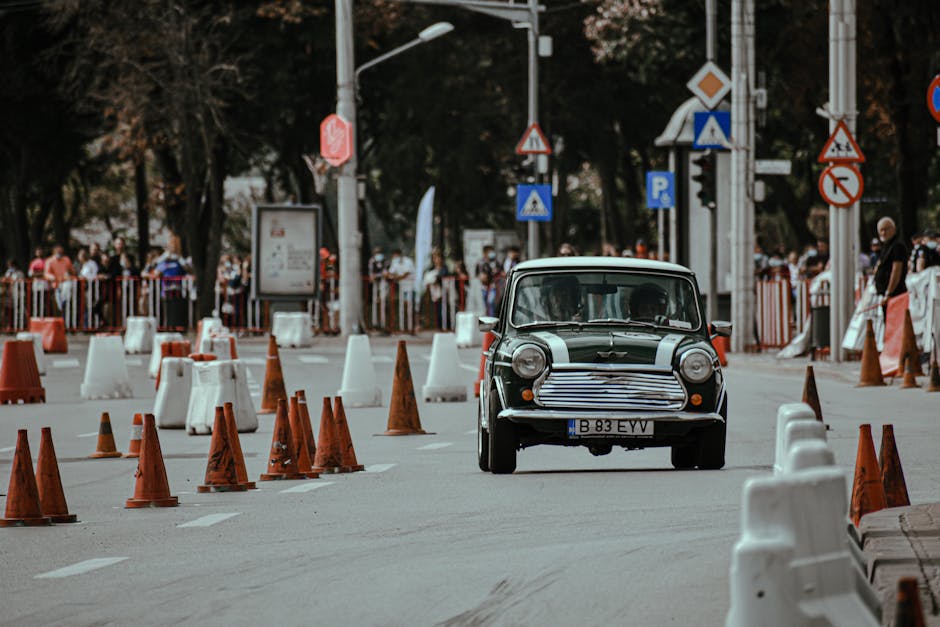
Autocross is the most approachable form of motorsport in North America. Entry fees are $40 to $75. The course is slow enough that you can't hurt the car or yourself badly. The format is forgiving of beginners. And the community is almost universally welcoming. Despite all of this, most street-car enthusiasts never try it, and the ones who do often show up the first time badly prepared and walk away discouraged.
I competed in my first autocross in an E46 M3 seven years ago and finished so far down the results I didn't bother to look up my time. The car was wrong. My tire pressures were wrong. My understanding of the course was wrong. I ran out of sessions before I figured out how to take a single clean run. Since then I've done about sixty events and I'm still learning. Here's what I wish someone had told me before the first one.
What autocross actually is
Autocross is timed laps around a course laid out with traffic cones, usually on a large paved lot like an airport runway, race track paddock, or sports arena parking area. Cars run one at a time with maybe 20 to 40 other cars in the same class. Each driver gets four to six runs. Fastest time wins. Hit a cone, two-second penalty. Miss a gate, run disqualified.
Speeds are modest by track standards. Most autocross courses reward cars that handle second-gear corners well, meaning you're rarely over 60 mph. The whole event is about precision and planning, not outright velocity. This is what makes it a brilliant school for learning about vehicle dynamics. Mistakes cost seconds instead of body panels.
Classing and why it matters
SCCA autocross divides cars into classes by model, trim, and allowed modifications. A base Honda Civic runs in Street Touring, not against a modified Lotus Evora. Within each class the cars are relatively balanced. You compete against other cars like yours, which makes the results meaningful.
Before registering, look up your car's class on the SCCA website. Know whether you're in Street, Street Touring, Street Prepared, or something more exotic. Know what modifications your class allows. Running modifications outside class rules bumps you to a faster class and you'll be lapped by cars that have spent $40,000 on suspension and tires.
Car setup: minimal is best for first-timers
You do not need coilovers, camber plates, or competition tires to run autocross. The car you drove to the event is fine for the first several events. What actually matters is setup of the car you have.
Tire pressure is the single biggest variable. For most street cars on street tires, start with pressures 4 to 6 psi higher than your normal street settings. A car that runs 33 psi on the road wants 38 or 39 at autocross. The higher pressure resists the sidewall flex under hard cornering. Run a few runs, check pressures hot, adjust. You'll find the window where the tire grips best.
- Start pressures: cold, slightly above street spec, ramp up from there
- Check hot pressure after each run
- Sidewall chalk marks tell you if you're rolling over: too much chalk worn off outside means more pressure needed
- Sweet spot varies by car, somewhere between 36 and 44 psi is typical
What to take off the car
Empty the trunk. Remove floor mats. Take out the roof cargo box if you have one. Pull out anything loose in the cabin. This is the same prep as a track day but less extreme. The goal is to reduce weight where you can and eliminate loose objects that could interfere.
Disable traction control and stability control. On most performance cars these systems are tuned to dial back power when you're pushing through a corner, which is exactly what you don't want while autocrossing. There will be a long-press button combination to fully disable, different for each manufacturer. Search your car's specific procedure before the event. A Porsche, BMW, and Corvette all have different methods.
Walking the course
Every autocross starts with a course walk. Competitors walk the course on foot, looking at each gate and slalom, committing the layout to memory. First-timers tend to walk the course once at a jog. This is a mistake. Walk it at least three times, with these different goals.
First walk: identify the obvious features. Slaloms, gates, turnarounds, the finish. Build a rough mental map.
Second walk: identify reference points for each decision. Where do you brake for the fast sweeper? Which cone marks the entry of the slalom? Where do you need to look ahead to avoid the off-camber left?
Third walk: visualize driving the course at speed. Pretend you're in the car. Make the braking and steering motions with your hands as you walk. Commit the line to muscle memory. This one actually matters. The brain learns sequences better through physical rehearsal than mental rehearsal alone.
Where novices lose time
Novices lose time in three places, almost without exception. The first is slow entry into slaloms. You enter the first cone too fast and the car is already committed to the wrong angle for the second cone. You have to scrub speed in the middle of the slalom to get the line back. Entering slaloms at 5 mph less than you think you need, and carrying more speed through the middle, produces faster runs.
The second is the mid-course transition. Novices treat each section of the course as a separate puzzle. Fast drivers see the whole course as a flowing sequence where the exit of one section positions them for the entry of the next. Look three features ahead, not at the cone you're about to pass.
The third is the finish line. Novices lift early and coast across the finish. The timing lights stop when you cross, not when you lift. Stay on the throttle until your front bumper breaks the beam.
What to expect at your first event
Registration opens early, usually between 7 and 8 am. Tech inspection happens at registration. Bring your car, your helmet, and your printed waiver. Tech checks for loose items, battery tie-down, fluid leaks, and that the wheels are tight. Issues at tech are usually things you can fix in five minutes, like tightening a battery cable.
After tech you go to the novice meeting. This is 20 minutes of rules and safety information. Pay attention even if it feels obvious. Every club has some local quirks. After that, the course walk begins. Walk it as many times as the schedule allows.
Runs happen in order by class. Between runs, competitors work the course as corner workers. This is mandatory. You walk to a corner, retrieve knocked-over cones, and signal the timing booth for any faults. Don't skip this. It's part of the event and it's how you learn what the course looks like in real time.
Your first run will be terrible
Expect this. First-run times for beginners are typically 15% to 25% slower than their eventual fastest run of the day. The first run is about seeing the course at speed, not about times. Drive it clean, no cones, no missed gates. The time doesn't matter.
Run two, push a little harder. Run three, harder still. Run four is usually where new drivers find their best time because they've dialed in reference points and feel comfortable. Run five and six can be faster or slower depending on course conditions and your fatigue level.
What to do between runs
Drink water. Check tire pressures. Watch other drivers run the course and notice what the fast guys do. Some autocross clubs allow you to ride with an experienced driver between your own runs. Take that opportunity if offered. Riding shotgun with someone fast is the single fastest way to understand what a course looks like when driven well.
Don't obsess over your time between runs. Watch what other drivers are doing. Talk to people in your class. Autocross is a social event and the community is where the knowledge lives. Ask questions. Most experienced autocrossers love talking about lines and setup, and they'll share freely.
What not to do
Don't show up with bald tires expecting to be competitive. Don't argue with corner workers about cone calls. Don't run open lines of communication back to your car computer about traction control settings when the novice chief told you to turn everything off. Don't drive home after the event if you're exhausted. Events burn through more mental energy than people expect.
The bigger picture
Autocross teaches you to read a car. You learn understeer and oversteer in their pure forms, at speeds where you can experiment without disaster. You learn weight transfer through corners because the courses demand it constantly. You learn how your car actually handles versus how you assumed it handled. These are skills that translate directly to better street driving, safer winter driving, and more confidence in an emergency situation.
Many autocrossers also discover the community as the real reason to keep going. Racing friends are different from daily-life friends. You spend eight hours in a parking lot with them, helping each other, comparing notes, eating bad food truck tacos. It's cheap, honest, and genuinely a good time. Sign up. Drive your daily. Watch your first run be terrible and your fourth run be not terrible. That's the start of it.