Timing Belt vs Timing Chain: What Actually Fails, When to Replace It, and What It Costs You If You Don't
A snapped cambelt or a stretched timing chain can turn a routine service into an engine rebuild. Here's how to tell which one your car has, which engines are known troublemakers, and what it actually costs to get it wrong.
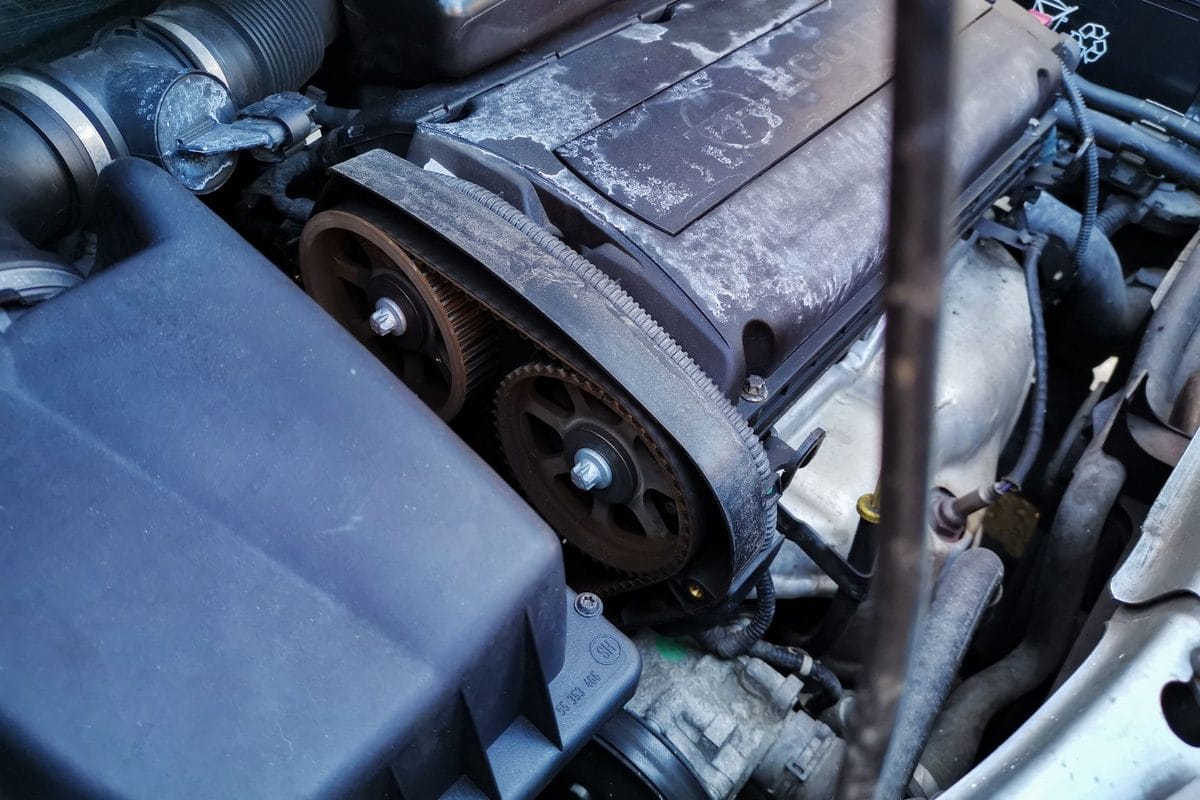
A mechanic in Luton once told me the same line every week: "Belt or chain, mate?" Half the drivers on his ramp couldn't answer, and most of them had never once thought about the strip of rubber or the loop of metal quietly keeping their pistons and valves from colliding sixty times a second at motorway speed. That question decides whether a scheduled job costs you £350 at Halfords or an unscheduled one costs you a new engine.
Timing belts and timing chains do the identical job — they keep the crankshaft and camshaft turning in sync so valves open and close at exactly the right moment relative to the pistons. The difference is what happens when either one fails, and how much warning you get beforehand. Get this wrong and you're not looking at a repair bill. You're looking at a write-off letter from your insurer.
Belt or chain — how to tell which one you've got
Check your handbook or logbook first; most manufacturers state it under "cambelt" or "timing chain" in the maintenance schedule. If you don't have the book, a two-minute call to a main dealer with your registration number will settle it, and it's worth doing before you buy a used car, not after.
As a rough guide, smaller turbocharged three- and four-cylinder engines from the last decade increasingly use chains rather than belts — Ford's 1.0 EcoBoost, most of the PSA/Stellantis 1.2 PureTech units in Peugeots and Citroëns, and the majority of current BMW and Vauxhall petrol engines. Diesels are split roughly down the middle depending on the generation. Older and mid-size naturally aspirated engines, particularly VW Group's EA211 and EA888 petrol range and a good chunk of Ford's Duratec and Duratorq lineup, still run belts on a fixed replacement schedule.
Why this matters before you buy
A used-car listing rarely mentions cambelt history, and that's exactly the gap that catches people out. Ask for the service book stamp showing the last cambelt change and the mileage it was done at — no stamp, no proof, treat it as never done and budget accordingly.
Why belts still exist when chains outlast them
Chains run in oil, wear slowly, and in theory last the life of the engine — which is why manufacturers historically marketed them as a maintenance-free component. Belts run dry, degrade with heat and oil contamination, and need replacing on a fixed interval regardless of how they look. So why do so many manufacturers still fit belts at all?
Cost and refinement, mostly. A belt drive is lighter, quieter, and cheaper to produce than a chain-and-tensioner assembly, and on engines where the interval can genuinely be met — VW's 1.6 and 2.0 TDI typically run 4 years or 60,000 miles, Ford's 1.6 Duratec around 10 years or 100,000 miles — a belt is not inherently the worse choice. The reputation belts have for being the "risky" option comes almost entirely from owners who ignored the interval, not from the belt itself failing early.
The interference-engine problem
Here's the number that actually matters: on an interference engine, a snapped belt or a skipped chain lets the pistons strike the open valves. The repair bill for that is not a service item — it's a partial or full rebuild running £1,500 to £3,500 at a main dealer, and on anything over eight years old, most insurers will write the car off rather than pay it.
Non-interference engines exist — the piston and valve paths don't overlap even with the timing out of sync — but they're now a minority in petrol and diesel cars sold new in the UK since roughly 2005. Assume interference unless your handbook explicitly states otherwise, because guessing wrong here is the single most expensive mistake a car owner can make.
When chains go wrong — and why it's not "maintenance-free" any more
"Timing chain" used to mean "forget about it." On several high-volume engines built since 2012, that stopped being true.
PSA's 1.2 PureTech three-cylinder, fitted across Peugeot, Citroën, and some Vauxhall/Opel models, developed a well-documented reputation for chain stretch and tensioner failure well inside 60,000 miles — Stellantis extended warranty cover on affected units after enough claims went through. Ford's early 1.0 EcoBoost units and several Vauxhall 1.4 turbo petrols showed similar rattle-then-fail patterns. None of these were sold with a chain replacement interval, because chains aren't supposed to need one — which is exactly why owners had no warning until the rattle on cold start-up turned into a check-engine light, and then into a dead engine.
The fix, when it's caught early, is a chain, tensioner, and guide replacement — and on most transverse-engined cars this chain sits at the flywheel end, against the bulkhead, which usually means pulling the engine or gearbox to reach it. Labour alone runs 8 to 14 hours at most independent garages. Total bill: £900 to £1,800, against £300 to £600 for a routine cambelt-and-water-pump kit on a comparable belt-driven engine.
The tell-tale sign
- A rattling or ticking noise on cold start-up that fades after a few seconds — the classic PureTech and early EcoBoost symptom
- A check-engine light with a camshaft or crankshaft correlation fault code
- Rough idle or a slight power loss that a garage can't immediately trace
- In worse cases, metal filings visible in the oil at a service — by that point the tensioner has already started shedding material, and to be blunt, you're on borrowed time
What to actually do about it
Book the cambelt on the manufacturer's mileage or time interval, whichever comes first — not whichever feels less urgent. A belt that looks fine at 58,000 miles on a 60,000-mile interval is not a reason to push it to 70,000; belts don't degrade visibly until they're already close to failure, and by the time you can see cracking in the rubber, you've usually missed the safe window.
If you're driving one of the known problem chain engines — PureTech 1.2, early EcoBoost 1.0, the Vauxhall/Opel 1.4 turbo family — get the tensioner checked at every service from 40,000 miles, even though there's no official replacement interval. An independent specialist familiar with that specific engine will know what to listen for on a cold start, and that five-minute check is far cheaper than the alternative. Kwik Fit and ATS Euromaster can quote for cambelt kits on most mainstream models within a day; for chain work on interference engines, a main dealer or an independent who specialises in that exact platform is worth the extra cost over a generic fast-fit chain.
One more thing worth knowing: cambelt condition is not part of the MOT test. The tester will not check it, will not warn you about it, and an expired belt with no visible damage will sail through an MOT the day before it snaps on the motorway. That gap between "passed its MOT" and "safe to drive" catches out more owners than any other single maintenance item on a car.
The bottom line for your logbook
Buy the service book stamp, not the seller's word. Set a calendar reminder for your cambelt interval the day you buy a belt-driven car, because dealers won't chase you for it and the DVLA certainly won't. And if your engine has a documented chain-tensioner problem, budget for the check now — £60 for a listen at a specialist beats an £1,800 engine-out bill after the rattle turns into silence.