Track Day Preparation: What to Bring and What Not To
Track days go badly when you show up treating them like a spirited road drive. Here is how to prepare properly.
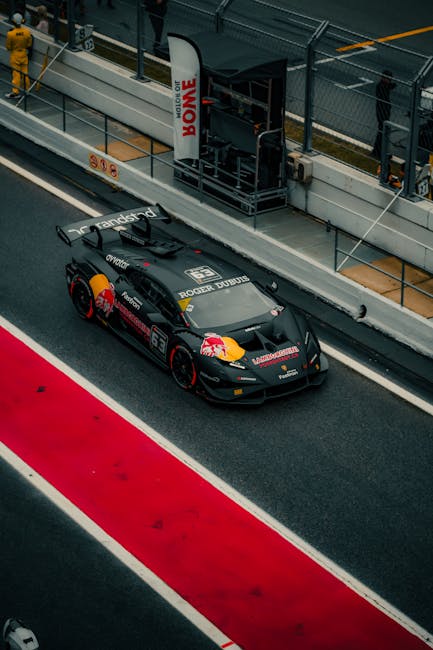
My first track day was at Thunderhill West back in 2019. I showed up with a 2016 Mustang GT, a bottle of water, and absolutely no idea what I was doing. Within two sessions I'd cooked the brakes, the fluid boiled in the master cylinder, and I had a very educational conversation with the instructor about why nobody runs Motorcraft DOT 3 at 100 mph into Turn 1. Everything I needed to know to avoid that day is information that's freely available and almost nobody tells you before you register.
Track days aren't dangerous when you prepare correctly. They become dangerous when you show up treating the event like a spirited canyon drive. The equipment and mindset are different, and getting both right is what separates an excellent day from a towed car and hurt feelings.
What "track prep" actually means
The car you drive to work is not the car you take to a track. Not because it's physically incapable of lapping, but because the systems in it are tuned for street operating conditions. The brakes are designed for one panic stop from 60 mph, not for 25 laps of repeated threshold braking from 120 mph. The fluids are specified for weather-sensitive but not extreme-temperature conditions. The tires have compounds optimized for tread life on variable surfaces.
Track prep is the process of adjusting the car's systems so they hold up to repeated lap sessions. You're not rebuilding the car. You're making sure specific systems can survive heat for 20 minute stretches at a time, four or five times a day.
The braking system is the first thing to handle
Brake pad compound matters more than any other single change. Street pads are designed for cold bite and long life. They start to fade around 550 degrees Fahrenheit and become nearly useless by 650. Track-capable street pads like Hawk HPS, Carbotech 1521, or Ferodo DS2500 maintain friction up through 900 degrees, which is roughly where a well-sorted car operates at speed.
Brake fluid is the item that killed my first day. Factory fluid has a dry boiling point around 460 degrees and a wet boiling point around 285. At track temperatures, normal fluid absorbs moisture over months of service and the wet boiling point is where you end up. When you apply the brakes, the fluid boils and compresses, and the pedal goes to the floor. This is the "long pedal" you hear track instructors warn about. A fresh flush with Motul RBF 660 or Castrol SRF has a dry boiling point around 600 degrees and won't fail you within a typical day unless you're doing something wrong.
Tires and air pressure
You don't need track tires for a track day. Most first-timers are faster and safer on the street tires the car came with. What matters is that the tires have meat on them. Anything below 5/32 tread depth overheats rapidly on track and loses grip progressively through each session. Tires from the bargain bin at Costco with 30 treadwear ratings aren't a magic upgrade if they're worn to 4/32.
Hot tire pressures on track run roughly 8 to 12 psi higher than cold pressures. Start at the manufacturer's cold spec, do a warmup lap plus one flier lap, come in, measure hot pressures. On most street cars the hot target is somewhere between 36 and 40 psi, depending on platform. Pressures climb faster on summer tires and faster still on turbo cars that build heat through corner exits.
Fluids you might not think about
Engine oil temperature climbs at track pace. Street oil works fine at 220 degrees. By 280, you've lost significant viscosity. Above 300, you're doing progressive damage to bearings. A lot of modern performance cars have factory oil coolers that handle this. A lot of crossovers, sedans, and older sports cars don't. Check your oil temperature gauge during sessions. If you don't have one, consider whether to add one via OBD-II data logger.
Transmission and differential fluids take similar abuse. Manual transmission fluid is usually fine for a single track day but a sustained schedule of track days will shear it down. Automatic transmission fluid gets hot fast on a road course with repeated wide-open-throttle shifts. Differential fluid climbs as you corner at load. For a first track day you're probably fine on factory. For a regular track schedule, upgrade to a synthetic high-temperature fluid designed for motorsport use.
What to bring: the gear list
Beyond the car, the list is short but specific.
- Snell SA2020 or SA2025-rated helmet, mandatory at every real track event
- Tire pressure gauge accurate to 0.5 psi, analog dial type preferred over digital
- Torque wrench for checking lug nuts between sessions
- Portable air compressor capable of 0-60 psi
- Jack and jack stand for quick wheel checks
- Brake fluid (fresh bottle, sealed, matching your system)
- Spare front brake pad set, in case you wear through
- Electrical tape and zip ties for temporary repairs
- 2 gallons of drinking water, minimum
- Shade, whether a pop-up canopy or at minimum an umbrella
- Food that doesn't require preparation
- Sunscreen and a hat, because paddock heat exhaustion is real
Things you don't need and should leave home: a whole toolchest of specialty tools, performance parts you think you'll install during lunch, anything else that turns your day into a wrenching project instead of a driving day. The best track day is one where you just drive.
What to take out of the car
Empty the trunk and interior before leaving home. Loose items become projectiles in a spin or accident. The floor mats come out. Loose change, phone mounts not bolted down, sunglasses, anything that can slide. Tech inspection at the track will fail you on a water bottle in the cup holder.
Remove aftermarket front-mounted radar detectors and toll transponders, which fly off their mounts under lateral load and can hit you or the passenger. If you have a dash cam, mount it properly or take it off. You don't want it skittering across the dash when you're threshold braking into a chicane.
Mindset: the thing nobody writes about
Here's the part that actually determines how your day goes. Track driving is not about going fast on lap one. It's about building lap by lap, learning the line, the reference points, the braking zones, and the car's behavior at each speed. The drivers who crash on track are almost never the professionals. They're the experienced street drivers who confuse highway speed with track speed and don't respect the consequences of the difference.
Your first session should be entirely about learning the layout. Do the session at 70% pace. Follow the instructor's directions. Don't pass anyone unless waved by. Your second session add another 10%. By your fourth session, you might be approaching your personal limit, and you'll know it because the corners feel natural and the car is responding predictably. This progression takes discipline because your ego wants to drive fast immediately.
Instructors and why you actually need one
Most track day organizations assign instructors to first-timers. Take this as seriously as a professional driver takes a coach. The instructor can see things you can't, because they're not focused on driving the car. They'll tell you you're braking too early, or your line is too apexed, or you're shifting on corner exit instead of on a straight. Listen. Internalize. Apply next session.
Instructors who've done track work for a few years have watched hundreds of drivers make the same mistakes. The advice is built from that pattern recognition. Arguing with your instructor is the single fastest way to have a bad day. The few drivers I've seen crash hard on track have without exception been drivers who dismissed what the instructor told them.
In-car discipline
Seat belt, helmet chinstrap, arm restraints if your group requires them. Check each before leaving grid. Both hands on the wheel at 9 and 3. Look far ahead through corners, not at the apex you're entering. Smooth inputs on throttle and brake. A car being driven at 9/10 feels calm from the driver's seat. A car being driven at 11/10 feels violent and chaotic.
Between sessions, drink water, eat a little, rest. Driving at high pace is physically and cognitively exhausting. Most track injuries happen on the last session of the day because fatigued drivers make slow decisions. If you feel tired, skip the session. There's no badge for driving exhausted.
Cool-down lap and shutdown
When the checkered flag comes out, lift off. Drive the cool-down lap at 50% pace. This lets the brakes and drivetrain temperatures come down gradually. Pulling into the paddock hot and shutting the engine off cooks the oil, warps the brake rotors against hot pads, and causes uneven heat dissipation in the calipers. Let the car idle for a minute after a hot session before shutting off.
Don't immediately drive over to check your times. Let the car settle. Walk around. Inspect the tires and brakes for anything unusual. The time to catch a developing problem is between sessions, not in the middle of one.
What it actually costs
A first track day at a local club event runs $200 to $350 for event entry. Helmet rental is $25 if you don't own one. Figure $150 for a new brake fluid flush before the event. Fresh brake pads add $150 to $400 depending on car. Fuel for the day, $80 to $120 at a big-track event. A tank of tires getting 10% of their life used up, harder to value but real.
All-in, expect to spend $600 to $800 for your first event if you own the basic gear. That's not cheap but it's not more than a nice dinner out plus a concert. And the memory of doing it right lasts decades longer.