Japanese Nostalgic Cars (JDM): Supra, NSX, Skyline Market Reality
Japanese nostalgic cars have stabilized after the 2022 peak. Here is the real state of Supra, NSX, Skyline, and RX-7 pricing.
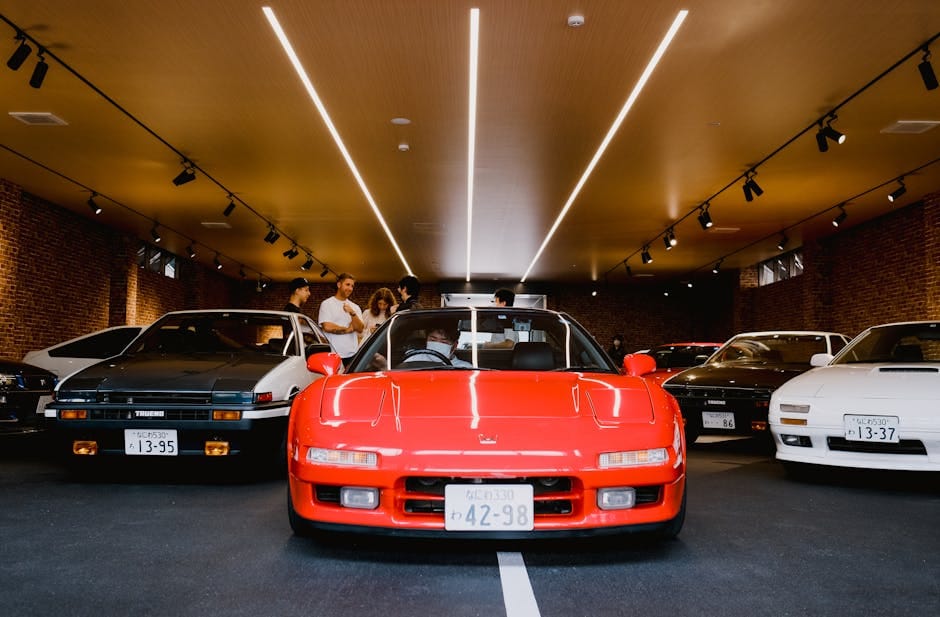
The Toyota Supra MkIV Turbo that sold for $42,000 in 2015 now trades for around $165,000 in comparable condition. The Honda NSX that was $48,000 in 2012 is $110,000 today. The first-generation Nissan Skyline GT-R that couldn't be legally imported to the US until 2014 has gone from $35,000 to somewhere between $140,000 and $220,000 depending on condition and spec. Japanese Nostalgic Cars, or JNC, have been one of the most dramatic appreciation stories in the collector car world for about a decade.
The reality on the ground in 2026 is more nuanced than the headlines suggest. Prices have cooled from 2022 peaks. Some cars have corrected 15-25%. Others have stabilized or continued climbing. The buying environment is more complicated than the momentum-driven market of three years ago. Here's where things actually stand, and what it means if you're considering one of these cars.
The cars and their current prices
Toyota Supra MkIV Turbo, 1993-1998. The 2JZ-GTE engine is the cultural icon. Six-speed manual examples in original unmodified condition currently trade between $140,000 and $195,000. Automatics are $100,000 to $140,000. The massive spread reflects condition, modifications, and provenance. Heavily modified examples are cheaper because the market wants stock.
Honda NSX, 1990-2005. US-market cars in driver-quality condition run $95,000 to $130,000 for normally aspirated variants. Type R and Zanardi Edition command significantly higher prices. The NSX has been climbing steadily because it's the only car on this list with usability approaching a modern sports car. You can daily drive an NSX if you really want to.
Nissan Skyline GT-R R32, 1989-1994. Now legal to import to the US since 2014. Driver-quality examples $90,000 to $135,000. Nismo-built special editions and original delivery cars from legendary dealers run higher. The RB26DETT engine has cult status that drives valuation.
Nissan Skyline GT-R R33, 1995-1998. Currently importable in the US. Driver-quality $80,000 to $115,000. Less iconic than R32 and R34, which keeps prices lower.
Nissan Skyline GT-R R34, 1999-2002. Not yet 25 years old for the later model years, so many can't be legally imported to the US. This scarcity premium pushes driver-quality import prices to $180,000 and special editions like V-Spec II or M-Spec Nur to $350,000-500,000.
Mazda RX-7 FD, 1993-2002. The twin-turbo rotary platform has been through a full appreciation cycle. Stock, unmolested examples run $45,000 to $85,000 depending on condition. The rotary engine's reputation for maintenance issues keeps prices lower than comparable non-rotary JDM cars.
Mitsubishi Lancer Evolution (various generations) and Subaru WRX STi. These have appreciated less than the Japanese supercars because production volumes were higher and they're less iconic. A clean Evo VIII or IX runs $35,000 to $55,000. A first-generation USDM STi runs $40,000 to $65,000 for pristine examples.
What changed between 2022 and 2026
The 2022 peak was driven by a combination of pandemic boredom money, the last wave of R32 imports becoming legal, and meaningful inflation. Prices on every JDM car moved up 40-80% from 2020 through 2022. Since then, some have corrected.
Supras have held value but stopped climbing. They're at roughly the same prices as 2022. The R32 GT-R market has softened 15-20% from peak because the supply of import-ready cars exceeded 2022 demand. NSXs have continued to climb but more slowly. Miatas and RX-7s have been volatile. Evos and STis have corrected significantly, maybe 20-30% from peak.
The market pattern matters. JDM collectibles are now in the stable plateau phase rather than the rapid appreciation phase. Buying now is about finding the right car at fair price, not speculating on continuing double-digit gains.
The hidden costs nobody talks about
Most JDM cars in the US are imports, which brings complications that domestic-market classics don't have. Right-hand drive on R32, R33, and R34 GT-Rs, and on Japanese-market Supras, is a real daily-use challenge. Toll booths, drive-thrus, parking garages with left-side ticket machines, and generally being on the wrong side of the road for passing all become minor inconveniences that add up.
Service availability varies. A 1994 Supra is relatively easy to service because the 2JZ engine has a huge aftermarket and many shops know it. A 1996 R33 GT-R is harder because fewer US mechanics have platform-specific experience. Parts availability for some components has deteriorated as Toyota and Nissan stopped producing replacement parts for cars past their regulatory support windows.
Insurance on these cars can be difficult. Standard insurers won't cover them because the values are collector-level and the cars are modified or quirky. Specialty insurers like Hagerty cover them but you're paying $1,500 to $3,500 per year for limited-usage policies on $150,000 cars.
Registration challenges by state
California is the hardest state for JDM imports because CARB emissions requirements are strict. A JDM-spec car that hasn't been certified for California emissions can't be titled as a regular passenger vehicle. Workarounds exist through specialty titles but the process is expensive and time-consuming.
Most other states are friendlier. Federal law allows import after 25 years old. States vary in how they title imported RHD vehicles. Texas, Florida, North Carolina, and most of the Southeast are straightforward. The Northeast is moderate. California, Washington, and Oregon are difficult.
What to look for in a JDM purchase
Mileage claims need to be verified. Many imported JDM cars show low US miles because they were just imported, but the Japanese mileage is the real mileage. Auction sheets from Japan, the JEVIC inspection reports, and the dealer paperwork should establish the real odometer reading. Any discrepancy is a red flag.
Modifications reduce value. Stock is king in the 2026 JDM market. An unmodified 1994 Supra is worth more than one with a full build regardless of the quality of the build. If you want a modified car, find one where the previous owner has already spent $30,000 on modifications and is selling at a discount compared to stock.
Japanese service records are gold when available. Auction sheets from the Japanese auction houses like USS, JU, and TAA provide standardized condition reports that are more detailed than any US auction documentation. A "Grade 4" auction score on a 1995 Skyline is roughly equivalent to a driver-quality designation with specific defects noted.
The broker question
Many JDM purchases happen through brokers who import the cars from Japan on behalf of US buyers. A reputable broker charges $3,000-8,000 over landed cost plus shipping, and handles import compliance, emissions certification, title paperwork, and federal safety compliance.
Cheaper brokers cut corners. They may not properly complete FMVSS conformity paperwork. They may misrepresent auction condition. They may sell cars with hidden accident histories from Japan. The savings of $2,000 on broker fees is not worth a $180,000 car with problems.
Good JDM importers in the US: Toprank International, JDM Legends, Japanese Car Connection, Japan Car Direct. Each has a track record. Verify references. Ask for customer contacts who've bought similar cars. Avoid fly-by-night operations that sprung up during the 2021-2022 hype.
Which ones are actually worth it
Honda NSX original-series. The combination of Acura dealer service, meaningful US aftermarket, left-hand drive in the US-market version, and mid-engine layout that's both exotic and practical makes the NSX the most usable JDM classic. Prices have climbed steadily for a decade and show no signs of reversing.
Toyota Supra MkIV. The cultural icon factor drives prices, and the car is genuinely excellent. The 2JZ platform has nearly infinite aftermarket support and the car is reliable by JDM-supercar standards. Stock examples with full service history are appreciating assets.
Mazda RX-7 FD. The rotary engine scares a lot of buyers, which keeps prices lower than the car's driving quality deserves. For someone comfortable with rotary maintenance (or outsourcing it to a specialist), these cars drive like nothing else and are genuinely underpriced for what they offer.
Which ones to be cautious about
Mitsubishi GTO 3000GT VR4, Eclipse GSX, and other lesser-known turbo JDM imports. These have appreciated on the rising tide but they're not iconic cars. They're competent but forgettable. If the JDM market corrects further, these are the cars most likely to lose value.
Any JDM car with significant modifications. The market has decided stock is best. Modified examples trade at 20-40% discounts and that discount grows as purist tastes continue dominating.
R34 GT-Rs at peak pricing. The hype is real but sustainability of $300,000+ prices on non-special-edition R34s is questionable. The market has paid those prices for a few years. A correction would not be surprising, and buying at the top hurts.
The honest long view
Japanese nostalgic cars are a maturing market. The days of 40% annual appreciation are probably past. What replaces them is a stable collector-car category where prices track inflation plus modest growth, similar to how classic American muscle cars behave now. If you buy because you love the car and want to drive it, you'll probably be fine on both enjoyment and eventual resale. If you buy to flip, you're late to the party.
The other important reality is that these cars are now genuinely expensive to own and maintain. Not Ferrari expensive, but significantly more than a 1990s Japanese car with comparable specs but without the JDM badge. A 1994 Supra costs 4-5x what a 1994 Lexus SC400 costs today, despite the Lexus having more features, better build quality, and similar mechanical basis. You're paying for the iconic status, not for extra value.
Buy the car you've always wanted. Don't buy the car you think will make you money. In the JDM market in 2026, these two framings often lead to different decisions, and the first one is almost always the better answer.