Nissan GT-R R35: Why the Godzilla Is a $70,000 Bargain
A used Nissan GT-R at $70,000 has supercar performance and a reliability record that embarrasses Ferrari. The catch is the tire budget.
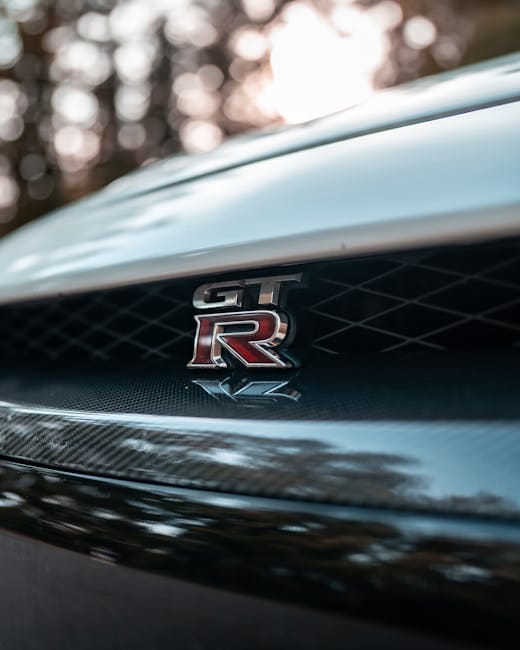
The Nissan GT-R R35 went on sale in 2009 for $69,850. It did zero to 60 in 3.5 seconds, lapped the Nurburgring in 7:29, and humiliated basically every supercar at or near its price point. In 2026, a well-maintained 2013 to 2015 GT-R Premium with 40,000 to 60,000 miles is sitting in the $62,000 to $78,000 range. That is supercar money for a car that still outperforms new cars costing twice as much. And unlike most performance cars at this price point, the GT-R has an unusual characteristic for a Japanese performance car. It is genuinely reliable.
I have a friend who has owned a 2014 GT-R Black Edition since 2019. Bought it for $75,000 with 28,000 miles. It is at 71,000 miles now and has been more reliable than his previous Porsche Cayman and dramatically more reliable than the Audi R8 he considered buying instead. The catch with GT-R ownership is not what most people think it is. The engine and drivetrain are overbuilt and reliable. The problem is tires, brakes, and the very specific dealer service requirements that keep the warranty relationship intact. Get those right and the GT-R is one of the most bang-for-buck supercars ever made.
What the R35 Actually Is
The R35 Nissan GT-R is an all-wheel-drive, twin-turbocharged V6 grand tourer with a dual-clutch automated transmission and launch control system. The 3.8-liter VR38DETT engine was hand-assembled at Nissan's Yokohama plant by a small team of specialist builders, each of whom signed a plaque under the hood of the cars they built. Power output started at 480 hp in 2009 and climbed over the generations, reaching 600 hp in the 2017 Premium trim. Most used GT-Rs in the market today are between 545 and 565 hp from the 2012 to 2016 model years.
The all-wheel-drive system is the defining characteristic of the car. The GT-R uses an electronically controlled clutch to vary torque distribution between front and rear axles, from 0 to 50 percent at the front axle depending on conditions. Launch control pulls the engine to 4,500 rpm against the brakes and dumps the clutch, resulting in zero to 60 times under 3.0 seconds on good tires in good weather. The car will pull 1.0 g of lateral acceleration on summer performance tires.
The interior, despite what the online reviews from the 2010s claim, is fine. It is not plush, it is not innovative, and it is not a match for the price point, but it is solidly assembled and the ergonomics work. The back seats fit a short adult if necessary. The trunk holds two sets of golf clubs. This is a performance car you can actually use as a daily driver if you want to, which is not true of most supercars at this performance level.
The Reliability Story
The VR38 engine is among the most reliable turbocharged performance engines in the industry. There are documented GT-Rs with over 200,000 miles on original engines, and the failure rate at the 100,000-mile mark is significantly lower than comparable high-performance engines from Porsche or BMW. The engine wants fresh oil and regular air filter changes and will run forever if given those.
The DCT transmission is the part that worries people, and it is the part that does require attention. The unit has a reputation for clutch wear in cars that have been launched aggressively, and a complete clutch replacement is $6,000 to $9,000. However, a normally-driven GT-R goes 80,000 to 100,000 miles before needing this service. My friend's 2014, driven hard but not launched repeatedly, got a clutch refresh at 58,000 miles for $7,200. Not cheap, but not insurmountable for a car in this performance class.
The bellhousing fluid in the transmission requires replacement at every 30,000 miles. This is a $400 service at an independent GT-R specialist and is essential for transmission longevity. Skipping this service is the number one cause of premature DCT failure.
Outside of engine and transmission, the GT-R is genuinely boring. No oil leaks, no cooling system issues, no electrical gremlins beyond normal aging electronics. The car is built like a Nissan economy sedan in terms of its durability engineering, and it shows.
The Expensive Parts of Ownership
Tires are the single largest ongoing expense. The GT-R runs a unique sizing with 255/40-20 fronts and 285/35-20 rears, and the OEM specification calls for Bridgestone Potenza RE070 tires that are specifically homologated for the car. A full set of OEM-spec tires is $1,800 to $2,200 installed. You will need a new set every 10,000 to 15,000 miles of enthusiastic driving, or every 20,000 miles of careful driving.
Brake pads and rotors are the second big cost. Stock Brembo brake pads are $450 to $600 per axle installed. Rotors last about 40,000 miles of street use or 15,000 miles with any track driving. A full brake refresh with new rotors and pads is $1,600 to $2,200 depending on axle.
The dealer service requirements are the third factor. Nissan's warranty program for GT-R requires all scheduled maintenance to be done at an authorized GT-R service center, of which there are only about 50 in the United States. Annual service is $800 to $1,400 depending on what is required. If you live more than an hour from a GT-R-certified Nissan dealer, ownership is more challenging.
Insurance on a GT-R runs $1,800 to $2,800 per year for a 35-year-old driver with a clean record. This is higher than comparable European performance cars partly because Nissan GT-R claims tend to be larger, as parts are expensive and specialized.
Which Year to Buy
The 2012 to 2016 Premium or Black Edition is the sweet spot for most buyers. These have 545 to 565 hp, improved launch control over earlier cars, revised suspension, and better interior materials than the 2009 to 2011 models. Prices are $62,000 to $78,000 depending on mileage and history.
The 2017 to 2019 GT-R got a major facelift with improved aerodynamics, a new interior, and 565 hp to 600 hp outputs. These cars are typically $85,000 to $105,000 used and represent a clear step up in refinement without losing any of the brutal performance.
The 2020 to 2023 GT-R Nismo is the halo car of the lineup, with 600 hp, carbon-ceramic brakes, and dry-sump lubrication. Prices are $160,000 to $200,000 and these cars are more track-focused and less comfortable as street cars. For most buyers, the regular Premium is the better choice.
Stay away from 2009 to 2011 GT-Rs unless you find an exceptional example. These cars have documented transmission issues that were partially addressed in later model years, and the earliest launch control programs caused enough transmission damage that Nissan briefly denied warranty coverage for launch-control-triggered failures. The situation has been resolved but the cars from this era are still riskier buys.
What Happens Next With GT-R Prices
Nissan is rumored to be developing an electric successor to the GT-R, but production of the R35 ended in 2024. This means the supply of used R35 GT-Rs is now fixed, and as cars get consumed by accidents, salt belt corrosion, or simple attrition, the available inventory will shrink. The JDM cars market has seen the Supra A80, the NSX NA1, and the Skyline R34 all appreciate dramatically in the last decade. The R35 GT-R has not yet followed this path because there were so many produced and so many survive in driveable condition.
My prediction for the R35 GT-R through 2030 is modest appreciation. Early cars from 2009 to 2011 will probably stay flat at $55,000 to $65,000. Mid-era cars from 2012 to 2016 will probably climb to $80,000 to $95,000 by 2030. Later cars from 2017 onward will probably increase $20,000 to $30,000 over their current prices as they become the last "new-era" GT-Rs still available in reasonable condition.
The R35 is a deeply impressive machine that is also a reasonable used car purchase. It is the rare supercar where you can buy it, drive it hard, and not worry that the next repair bill is going to ruin your year. For someone who wants genuine supercar performance and can accept the tire budget, the GT-R is one of the best deals in the performance car market. And unlike most of the others, it will probably be cheaper in three years than a comparable Ferrari 458.