The Tariff Bill Finally Hit the Sticker Price: What 2026 Model-Year Buyers Are Actually Paying More For
Tariffs have cost automakers over $35 billion since 2025 — and brands like Audi, Subaru, VW, and Kia have started passing the bill to buyers on the window sticker.
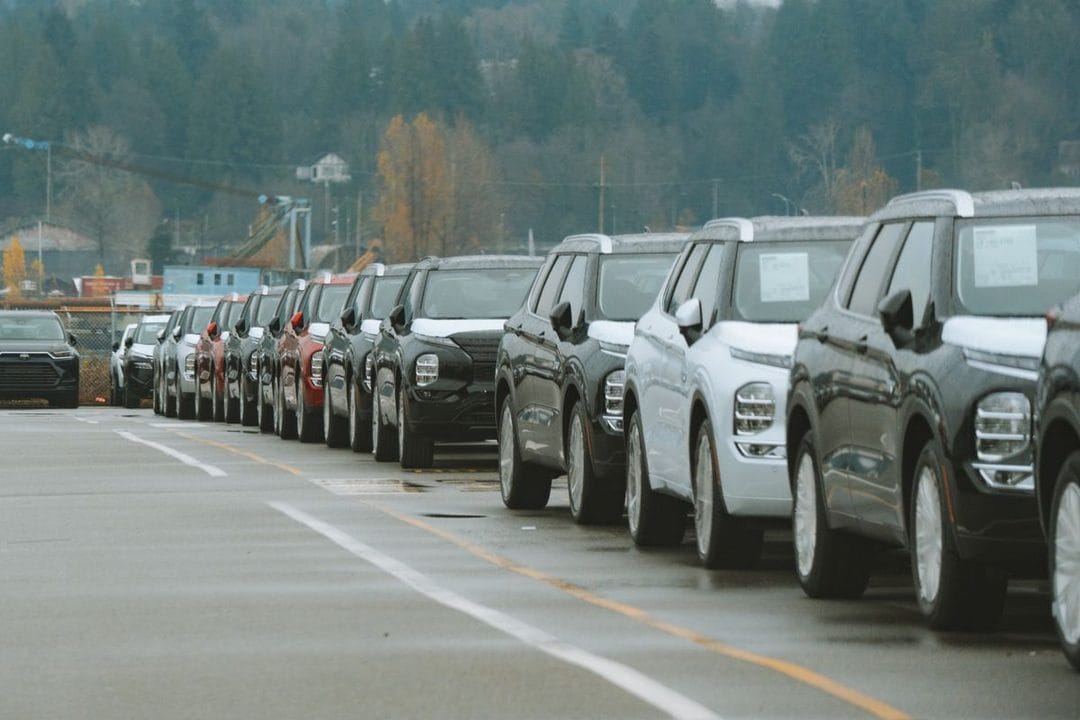
Walk onto a Subaru lot this month and the window sticker on a loaded Ascent might read about $2,055 higher than the same trim carried in January. Audi buyers are staring at increases anywhere from $800 to $4,100 depending on the model. Volkswagen quietly moved most of its 2026 lineup up somewhere between 1.9 and 6.5 percent. None of this happened because these cars got dramatically better. It happened because the tariff bill that automakers have been absorbing since 2025 finally landed where car buyers can see it — on the sticker.
The Math Behind the Sticker Shock
The current structure isn't one tariff, it's three stacked on top of each other, and each one hits a different part of the supply chain. Steel and aluminum imports carry a 50 percent tariff, which raises the cost of nearly every vehicle assembled in North America whether it's a Ford F-150 or a Honda Civic — both use imported metal somewhere in the build. Vehicles imported from the European Union, Japan, and South Korea face a 15 percent tariff on the finished car. Vehicles built in Canada or Mexico under USMCA rules get hit with a 25 percent duty on the portion of the vehicle's value that isn't certified as North American content, which sounds narrow until you realize almost no vehicle qualifies as 100 percent domestic anymore. A pickup assembled in Kentucky still needs a transmission from Ontario or a wiring harness from Nuevo León, and that piece of the vehicle's cost gets taxed even though the finished truck rolls off an American line. That's the mechanism nobody explains on the dealer lot — the tariff isn't charged once at the border on a finished car, it's charged wherever a taxable component crosses one, which is why almost nothing sold new in the US in 2026 comes out completely untouched.
Automotive News put a number on the cumulative damage: automakers have paid at least $35.4 billion in tariffs since 2025, and Toyota alone is projecting ¥1.45 trillion — roughly $9.1 billion — in tariff costs for its fiscal year ending March 2026, the single largest bill of any manufacturer. GM says it's looking at up to $5 billion in gross tariff-related costs this year. Ford has cited a $3 billion hit. BMW, Honda, Hyundai-Kia, Mazda, Mercedes-Benz, Nissan, Subaru, and Volkswagen have each either reported or projected tariff bills north of $1 billion apiece. That money doesn't vanish into a shareholder report forever — some of it, eventually, becomes your monthly payment.
Who's Already Raised Prices, and by How Much
Subaru moved first and moved broadly. Every model in its US lineup except one got a price increase effective in June, ranging from $750 on the Crosstrek and Impreza up to $2,055 on the top Ascent trim. Kia raised the Sportage by as much as $1,300, though the brand's marketing chief, Russell Wager, has argued the increase reflects new content for the 2026 model year rather than tariff pass-through — a claim that industry analysts have been openly skeptical of, given that Kia's Korean-built models are subject to the same 15 percent import tariff as every other Korean automaker. Audi went further than most, spreading increases of $800 to $4,100 across nearly its entire 2026 range while sweetening the deal with three years of prepaid maintenance on every new model, an attempt to soften a price jump that's hard to disguise as anything else. None of these brands buried the increase in a redesign or a new trim name the way automakers sometimes do when they want a hike to look like added value. Subaru applied it to the same Ascent, same options, same badge you could have bought in the spring. That kind of directness is unusual — the increase wasn't disguised as a redesign, it just wasn't advertised, either.
Volkswagen's approach was broader and more mechanical: starting prices on most 2026 models rose between 1.9 and 6.5 percent, a range wide enough that a Jetta buyer and an Atlas buyer are absorbing very different dollar amounts for the same tariff exposure. BMW has started raising prices too, according to a J.P. Morgan analysis tracking European-brand pricing, though the company hasn't broken out model-by-model figures the way Audi and Subaru have. Cox Automotive's broader read on the market backs up what these individual brand moves suggest: average new-vehicle sticker prices rose 3.3 percent in August compared to a year earlier, ahead of the typical seasonal pace.
The EU Deal That Could Undo Some of This
There's one piece of the picture that could move in the buyer's favor before the year is out. The European Union announced a trade framework in July under which Washington would cut its tariff on European-built cars and parts from 27.5 percent down to 15 percent, once the EU passes its own legislation reducing tariffs on US goods. EU trade chief Maros Sefcovic has said the European Commission intends to propose that legislation by the end of August, and — this is the part that actually matters for anyone cross-shopping a German or Swedish import right now — the relief is expected to apply retroactively to August 1 once it clears. If that timeline holds, a buyer who orders a European-built car this month could see a rebate or price adjustment months later rather than paying the higher rate permanently. Nobody at a dealership is going to bring this up unprompted, since it works against them, so it's on the buyer to ask directly whether a given deal already reflects the lower rate or still assumes the old one.
Why Detroit's Big Three Have Held Back — For Now
Not every brand has moved the sticker yet.
Ford and GM have kept list prices comparatively flat through the summer, and that restraint is deliberate, not accidental. Both companies build the large majority of their high-volume trucks and SUVs domestically, which limits their exposure to the 15 and 25 percent import tariffs even as the 50 percent steel and aluminum tariff still eats into margin on every vehicle regardless of where it's assembled. GM is absorbing up to $5 billion in costs this year without raising prices proportionally, which tells you the company is treating this as a market-share fight it can't afford to lose to Toyota or Stellantis on price alone. That restraint has a shelf life. Analysts tracking the 2026 model year widely expect further increases as the year progresses, because even a truck stamped "Made in USA" runs on wiring harnesses, semiconductors, and drivetrain components sourced overseas — nothing rolling off an assembly line in Dearborn or Detroit is actually tariff-proof.
What This Means If You're Shopping This Fall
If you've been sitting on a decision, this is the wrong month to keep waiting on a European or Korean-built model. Audi, Subaru, VW, and Kia have already shown their hand, and every signal points toward the Big Three following once their current stock of pre-tariff inventory clears out. Buy the 2026 Sportage, Ascent, or A4 now if you were going to buy it anyway — the $1,300 to $4,100 you'd save by beating the next round of increases is real money, not a rounding error. Skip financing offers that bury the tariff surcharge inside a longer loan term with a slightly lower advertised rate; dealers are already using that trick to make sticker increases feel smaller than they are, and a 72-month loan on a car that's already up $2,000 just moves the pain from the sticker to your interest total.
The one exception worth knowing about: domestically built trucks and full-size SUVs from Ford and GM are still, for the moment, your best hedge against further tariff-driven increases, precisely because those companies have chosen to eat cost rather than pass it on. That won't last through the whole model year, and buying a Silverado or F-150 in September on the assumption prices will stay flat through spring is a bet, not a certainty. Toyota's math is the clearest illustration of where this is headed — a $9.1 billion tariff bill on one manufacturer's books doesn't stay invisible to consumers for another full year.
Steel and aluminum tariffs alone add real cost to a vehicle built entirely in Ohio or Kentucky, and that's the part of this story that gets lost when the conversation turns into "imported cars versus domestic cars." There's no tariff-proof option left in the American new-car market — only degrees of exposure, and brands making different bets about how much of that cost they're willing to eat before they pass it to you.