Corvette C8 Stingray: Mid-Engine America at $70,000
The C8 Corvette is genuinely mid-engine and genuinely affordable. It is also the most unexpectedly interesting new American performance car in a generation.
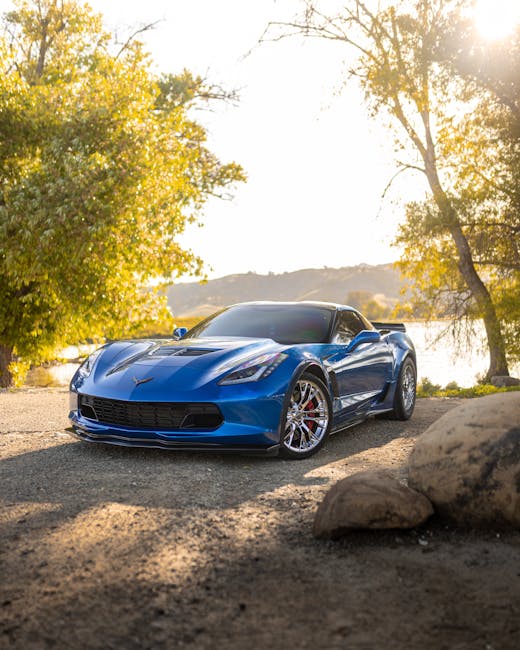
In 2019, Chevrolet announced that the next Corvette would be mid-engine. Enthusiasts who had been calling for a mid-engine Corvette since 1960 did not quite believe it. By 2020 the C8 Stingray was on sale at a starting price of $59,900 and was delivering supercar performance with a naturally aspirated pushrod V8 that most of the European industry had declared obsolete a decade earlier. Six years later, the C8 has sold in numbers that would have been unimaginable for a mid-engine American car, and the used market has settled into a pattern where base Stingray 1LT coupes with 15,000 to 25,000 miles are available for $60,000 to $70,000.
I drove a 2022 Corvette C8 Stingray Z51 with the 3LT interior package for a week last spring, borrowed from a friend who was traveling. The car covered 400 miles of mixed driving in that week. My opinion went through three distinct phases. First three days I was a skeptic. Next two days I was converted. Final two days I was writing an email to myself about whether a C8 was the right car for me to own. I did not end up buying one, but the experience made me take the Corvette more seriously than I had ever taken any Corvette in my life.
Why the Mid-Engine Layout Changes Everything
The C7 Corvette before the C8 was a front-engine, rear-drive sports car. It was fast, it was American, and it had the basic handling characteristics of any front-engine sports car. The weight was mostly forward, the polar moment was high, and the car understood itself as a big-engined GT car that could also be driven fast.
The C8 is a different animal entirely. With the 6.2-liter LT2 V8 located behind the seats, the weight distribution is 40 percent front and 60 percent rear. The polar moment is dramatically lower. The steering is lighter because there is less weight pressing on the front tires. The turn-in is immediate because the car is not trying to overcome its own inertia the way a front-engine car has to.
The feeling of driving a mid-engine car is genuinely different from driving a front-engine car, and the C8 delivers that feeling at a price that no mid-engine car has ever been delivered at before. The Ferrari 458, the McLaren 570S, the Porsche Cayman GT4, all of these cars cost two to four times what the Corvette costs while offering the same fundamental mid-engine architecture.
The Powertrain Is Better Than It Has Any Right to Be
The LT2 V8 in the Stingray makes 490 hp and 465 lb-ft of torque in base form, or 495 hp and 470 lb-ft with the Z51 performance package which adds the performance exhaust. Zero to 60 happens in 2.9 seconds with the Z51. Top speed is 194 mph. These are genuine supercar numbers and they come from an old-school small-block Chevy V8 with pushrods and two valves per cylinder.
The dual-clutch Tremec eight-speed automatic is a revelation. GM bought a dual-clutch design from Tremec and spent years tuning it, and the result is one of the best automatic transmissions in any production car. Shifts are crisp, downshifts are rev-matched automatically, and the transmission chooses gears intelligently in all driving modes. There is no manual option on the C8, which disappointed traditionalists, but honestly the DCT is so good that the manual would have been a worse car overall.
Fuel economy is better than any supercar should be. I averaged 22 mpg in mixed driving and 28 mpg on the highway at 70 mph with the cruise set. On premium gas, the real-world fuel costs for the C8 are similar to a mid-size luxury sedan, not to a supercar.
Living With the Car
The C8 is surprisingly practical for a mid-engine sports car. There are two trunks, the front trunk for daily items and the rear trunk behind the engine for golf clubs or weekend bags. Total cargo volume is 12.6 cubic feet, which is more than some sedans. I loaded a weekend's worth of luggage for two people into the car with space left over.
The interior is a mixed bag. Materials are generally good, with real leather on the seats and wrapped dash surfaces. The build quality is solid and there are no obvious cost-cut areas. However, the button layout on the center tunnel is strange, with climate controls arranged in a vertical strip that separates the driver and passenger. Some people love it. Some people hate it. I fell somewhere in between and learned to use it fluently within a few days.
Visibility is the usual mid-engine compromise. Rear visibility is poor through the mail-slot rear window. Front and side visibility are actually fine, better than on most supercars. Parking requires patience with the backup camera and the 360-degree view system is worth every dollar of the option package.
The ride quality is extraordinary for a car of this performance level. The magnetic ride control dampers handle bad pavement better than some luxury sedans. I put the car on a trip over 200 miles of broken Pennsylvania highway and arrived without back pain or fatigue. This is not the car an enthusiast might expect based on the specifications.
What to Watch Out For
The C8 has had some documented issues in early production years. 2020 and 2021 cars had issues with the high-pressure fuel pump, which caused rough idle and occasional misfire codes. The issue was addressed under warranty but any early C8 should be inspected for whether this service has been performed.
The Z51 performance brakes are adequate for street use but wear faster than standard brakes. Replacement pads and rotors run $1,400 to $1,800 per axle at a dealer. Aftermarket options are available at lower prices.
Tire wear is heavier than a front-engine sports car because the rear tires do more work. Expect 14,000 to 18,000 miles out of a set of Michelin Pilot Sport 4S summer tires with normal driving. Aggressive driving reduces that to 8,000 to 12,000 miles.
Insurance is comparable to other high-performance cars, typically $1,800 to $2,800 per year for a 35-year-old driver with a clean record. Corvette parts are cheaper than European performance car parts, which helps keep insurance costs more reasonable than exotic alternatives.
Which Trim to Buy
The base 1LT coupe is the value play at $55,000 to $65,000 used depending on mileage and condition. You get the full performance, no surprises, and basic but functional interior appointments. Most buyers would be happy with this configuration.
The 2LT adds heated and ventilated seats, rear camera mirror, and blind spot monitoring. Worth the extra $3,000 to $4,000 on the used market for most people who plan to drive the car regularly.
The 3LT adds premium leather, heated steering wheel, performance data recorder, and upgraded audio. Worth considering if you want the full luxury experience. Used price premium is typically $4,000 to $7,000 over 2LT.
The Z51 performance package is essential for anyone who cares about driving dynamics. It adds the performance exhaust for the extra 5 hp, magnetic ride control, dual-mode exhaust, upgraded brakes, limited-slip differential, and the performance gear ratios in the transmission. Z51 cars trade at $3,000 to $5,000 premium over non-Z51 cars and the premium is worth every dollar for enthusiasts.
Convertible hardtop models trade at similar prices to coupes. The convertible mechanism is well-engineered and the open-top experience is exceptional in a mid-engine car where you can hear the V8 behind you directly.
The C8 Versus Its Competitors
The closest direct competitor to the C8 Stingray is the Porsche Cayman GT4, which trades at $120,000 to $170,000 used. The Cayman is a better-handling car in absolute terms but the Corvette is faster in a straight line and approximately half the price. For most street use, the Corvette offers a clear better value proposition.
The Porsche 911 Carrera S at similar used pricing is a better luxury grand tourer but not as engaging in pure driving terms. The Porsche is the car you buy for long-term ownership and prestige. The Corvette is the car you buy for the most performance per dollar.
The BMW M3 and M4, which trade at $55,000 to $85,000 used for recent model years, offer similar performance in a sedan or coupe body style. The BMW is the right choice for a daily driver with back seats. The Corvette is the right choice for a weekend sports car with unique character.
Mid-engine America is a reality in 2026 and the C8 Stingray is a genuinely compelling car at genuinely reasonable prices. It is the first time in history that the mid-engine experience has been affordable to regular enthusiasts. That window is open now. Whether it stays open for another five years or whether Corvette prices climb as more buyers discover what the car actually is, only time will tell. If you want one, there has never been a better time to buy than right now.