DIY Oil Change: When to Do It Yourself and When to Pay
A DIY oil change saves $40. It also takes an hour, requires $150 in initial tool investment, and on some cars is genuinely a bad idea.
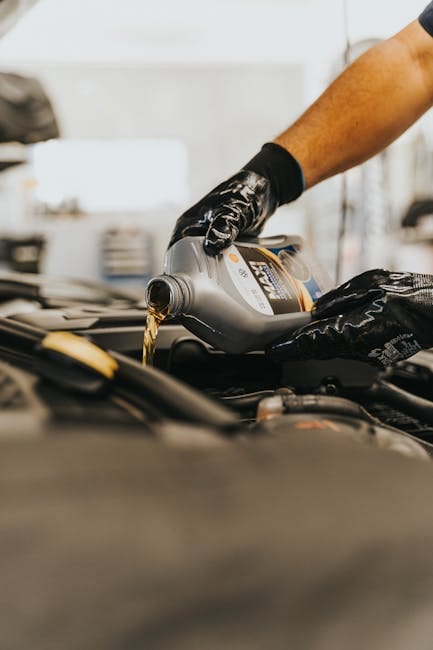
I have been doing my own oil changes on cars since I was 17 years old. I have done oil changes on roughly 40 different vehicles over the years, from a 1992 Honda Civic to a 2022 BMW M3. I have also paid shops to do my oil changes on occasion, and I have a clear view of when each approach makes sense. The internet tends to treat DIY oil changes as either a moral imperative ("real owners do their own work") or a pointless exercise ("just pay the $60 and move on"). Neither position is quite right. The decision depends on the specific car, your garage setup, how much your time is worth, and what you are actually trying to accomplish.
Let me run through the actual math and the real-world considerations, because the calculation is less obvious than either side of the DIY debate usually admits.
The Cost Breakdown That Actually Matters
A dealer oil change on a European car with full synthetic oil runs $120 to $220 in 2026 depending on the brand. A quick-lube chain charges $50 to $75 for the same service with their house-brand synthetic, which is usually a Group III oil from Castrol or Mobil but can be questionable private-label blends. An independent specialist shop charges $80 to $140 for a premium synthetic oil change done carefully.
A DIY oil change using the exact same premium oil your manufacturer specifies costs $35 to $65 for the oil and filter. On a BMW M3 that takes 6.9 quarts of BMW-spec 0W-30, my current cost per change is $55. On a Toyota Camry that takes 4.5 quarts of 0W-20 full synthetic, the cost is about $32.
The per-change savings versus a dealer is $85 to $155 in most cases. That is real money. What is not in the purchase price comparison is the time investment, the tool investment, and the disposal factor.
Time for a DIY oil change is typically 45 minutes to 90 minutes, including warm-up, drain, refill, and cleanup. Time for a dealer appointment is 60 minutes drive plus 90 minutes waiting at the dealership, for a total of 2.5 hours. Quick-lube is 30 minutes in and out. The dealer appointment costs you more total time than the DIY change for most people.
Tool investment is the overlooked part. A basic oil change requires a drain pan ($30), a set of metric wrenches ($60), a filter wrench ($15), an oil filter funnel ($10), and a jack plus jack stands ($200) if your car does not have enough ground clearance. That is $315 in one-time tooling for full capability. A ramp system costs $80 and works for cars with ramp-friendly approach angles. If you are getting into your first DIY oil change, the first one costs you that tool investment plus the oil.
Disposal is the other factor. Used oil needs to go somewhere. AutoZone, O'Reilly, and Advance Auto Parts all accept used oil for free at most locations. Finding the time to drop off old oil adds 15 minutes per change.
Cars Where DIY Oil Changes Are Straightforward
Most mainstream sedans and SUVs are genuinely easy oil changes. The drain plug is accessible with a standard socket wrench and the oil filter is either a spin-on canister or a cartridge filter in a well-placed housing. Cars in this category include most Honda, Toyota, Nissan, Mazda, Subaru, Ford, GM, and Stellantis vehicles. The entire job is a 45-minute driveway operation if you have the tools.
Popular performance cars like the Subaru WRX, the Ford Mustang GT, the Nissan 370Z, and the Toyota Supra are also straightforward. Most BMW models except the M cars have accessible oil filters, though German cars tend to require more specialized tools and cleaner work habits than Japanese cars.
Trucks and large SUVs generally have easy oil changes because the engines are elevated and there is room to work. Ford F-150, Ram 1500, Chevy Silverado, Toyota Tundra, and Nissan Titan are all straightforward DIY jobs.
Cars Where DIY Is a Mistake
Certain cars are built in ways that make DIY oil changes genuinely difficult or risky. Ferrari, McLaren, and Lamborghini models have oil systems designed around specialized equipment that most home garages cannot replicate. Dry-sump lubrication systems, in particular, require specific filling procedures and proper warm-up cycles to avoid air pockets that can starve the engine of oil.
Some Audi models with direct-injected engines have oil filler locations that are difficult to access and require specific torque sequences on the housing. Getting the torque wrong on a metal-housing oil filter can crush the filter and leak oil under pressure. On these cars the dealer is not unreasonable.
BMW cars with the V8 and V12 engines have complex oil cooler lines that can leak if disturbed during an oil change. The M5 V8 engine specifically has oil cooler issues that are best handled by specialists who know the failure modes.
Any car with an oil life monitoring system that uses dealer-specific software to reset the oil change interval can be a hassle for DIY owners. Most BMWs, Mercedes, Audis, and Volvos require either a scan tool ($80 to $250 for a compatible model) or a visit to the dealer to reset the oil life indicator. This is a legitimate hassle that tips the math toward paying a shop in some cases.
The Other Benefits of DIY Oil Changes
The savings are the obvious benefit, but the less-obvious benefit is visibility into the condition of your car. Every time I change the oil on my own cars, I do a 10-minute walk-around that includes checking brake pad thickness, looking at tire tread depth, inspecting the brakes for any damage, verifying coolant and power steering levels, and listening to the engine at idle after I finish the work. I know problems are coming 3 to 6 months before they actually happen because I am physically under the car every few thousand miles.
A dealer or quick-lube shop will also do a quick inspection, but they are incentivized to find issues that generate billable work. A DIY owner is incentivized to find issues early, when they can still be addressed cheaply. This alignment of incentives matters over time.
DIY oil changes also force you to understand the car's maintenance requirements. You end up reading the owner's manual carefully, researching the right oil specification, and understanding why the drain plug should be torqued to a specific value. This knowledge pays off when other maintenance issues come up, because you already have the context to understand what the shop is telling you.
My Practical Recommendation
If you own a mainstream sedan or SUV, a performance car that is not exotic, or any truck, and you have access to a garage or driveway where you can work on the car, DIY oil changes make sense. The $315 in initial tooling pays back in roughly four oil changes on any European car, or six to seven changes on a Japanese car. Beyond that first investment, the savings continue indefinitely.
If you own a Ferrari, McLaren, Lamborghini, or other exotic, pay a specialist. The risks of doing it wrong exceed the savings and the cost of repair if something goes wrong is catastrophic.
If you have a car with a complex oil life reset procedure and you do not own a scan tool, paying the dealer for occasional oil changes while you do the other maintenance yourself is a reasonable compromise. You can still do easy DIY work like air filters, cabin filters, spark plugs, and brake pads without the dealer.
If you simply do not want to spend Saturday morning under a car, pay the shop. There is nothing wrong with this choice. The value of your time is what you say it is.
The one thing I will say with conviction is that the "free oil changes for life" that some dealers offer with a new car purchase is almost always a bad deal. The dealer usually recovers the cost by rushing the service, using lower-grade oil than specified, or pushing unnecessary additional services during each visit. A customer who thinks they are getting free oil changes is usually paying for them through the nose in other ways. Free oil changes are rarely actually free.
The other thing worth saying is that the difference between a good oil change and a bad oil change is substantial over the life of a car. A good oil change uses the right oil, the right filter, the right torque on the drain plug and filter, and the right amount of oil. A bad oil change uses questionable oil, a cheap filter, and a mechanic who is running behind schedule. The DIY owner who cares about their car is almost always going to do a better oil change than the average shop. That is not an argument that everyone should DIY, but it is an argument that the quality of the service matters regardless of who does it.